
OECD verilerine göre online bahis kullanıcılarının %70’i futbol üzerine bahis yapıyor ve bettilt giriş futbol kategorisinde en yüksek oranları sunuyor.
bahsegel giriş bahsegel bettilt bahsegel bettilt bahsegel bettilt bahsegel giriş bahsegel giriş bettilt bettilt bettilt bettilt bettilt bahsegel bahsegel giriş bettilt-tr.net bahsegel bahsegel bahsegel https://bahsegel-kayit.ink/ https://bahsegel-giris.digital/ bahsegel bahsegel bahsegel https://bahsegelin.pro/ paribahis paribahis paribahis paribahis paribahis bahsegel-lein.vip casinomhubProstate Cancer: PSA, Gleason Score, Staging & Treatment Options
Prostate cancer starts in the prostate gland. For many patients, the most confusing parts of diagnosis are the PSA test, the Gleason score, and the newer Grade Group system. These tools help describe how likely the cancer is to grow or spread, and they are used alongside staging and imaging to guide treatment decisions.
What Prostate Cancer Is
Prostate cancer begins in the prostate, a gland below the bladder. Some prostate cancers grow slowly, while others are more aggressive. Patient guidance from NCI and ACS explains that treatment planning depends on several factors together, especially the PSA level, Grade Group/Gleason score, and stage.
What the PSA Test Means
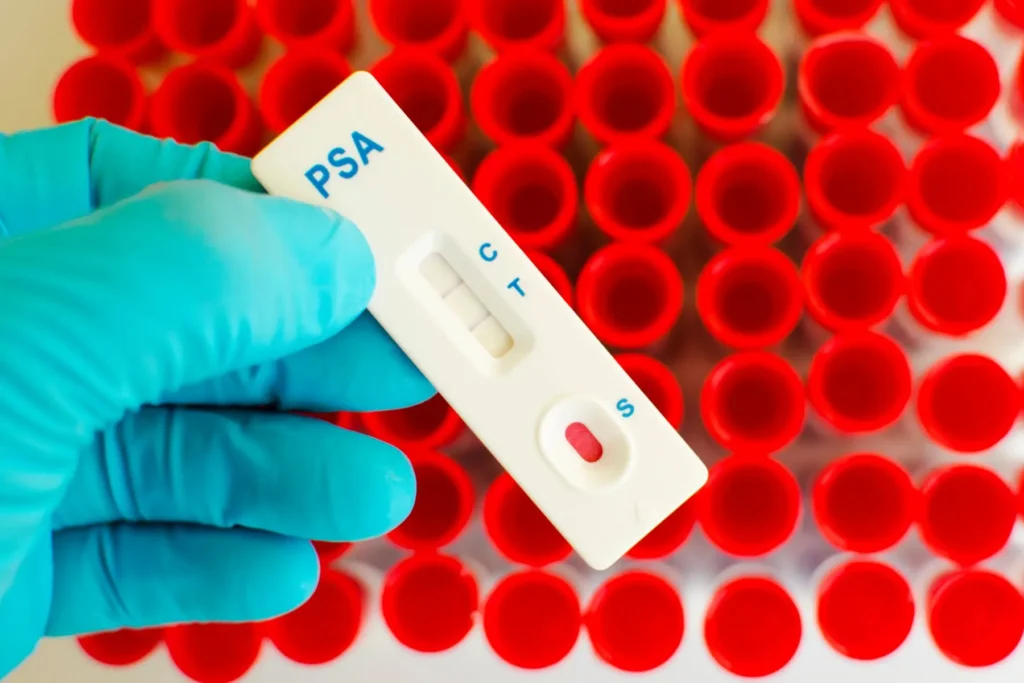
The PSA test is a blood test that measures the level of prostate-specific antigen (PSA). NCI explains that PSA is a protein made by normal prostate cells as well as malignant prostate cells, and PSA can be higher not only in prostate cancer but also in benign conditions such as benign prostatic hyperplasia (BPH) and prostatitis.
Simple patient explanation
A useful plain-language explanation is: PSA is a clue, not a diagnosis by itself. A higher PSA can be one reason for more testing, but it does not automatically mean cancer, and a lower PSA does not rule everything out on its own. That framing matches NCI’s patient fact sheet.
How PSA is used
NCI says the PSA test is used in several ways, including helping evaluate possible prostate cancer and monitoring prostate cancer over time. On a patient page, it is best described as one part of the bigger picture, not the only answer.
What the Gleason Score Means
The Gleason score comes from prostate tissue examined under a microscope, usually after a biopsy. ACS explains that prostate cancers with a Gleason score of 6 or less are generally considered lower grade, a Gleason score of 7 is intermediate, and Gleason scores of 8 to 10 are higher grade and more likely to grow and spread.
Important user-friendly note
Although the full theoretical Gleason scale is wider, ACS notes that in practice scores below 6 are rarely used today. That is why many patients see scores from 6 to 10 and assume 6 is “middle,” when in modern reporting it is actually at the lower end.
Pathology Guide
Many patients now see both a Gleason score and a Grade Group on reports. Grade Group is often used as the simpler modern summary, while Gleason score is still widely recognized.
How they relate
Intermediate pattern
Higher grade disease
Most aggressive pattern
Diagnosis and Staging
Prostate cancer staging is based on more than tumor size. ACS explains that staging uses:
the T category for the main tumor,
the N category for nearby lymph nodes,
the M category for spread to other parts of the body,
the PSA level at diagnosis, and
the Grade Group, which comes from the Gleason score.
Treatment Overview
Treatment options depend on how aggressive the cancer appears, whether it is confined to the prostate or has spread, and the patient’s priorities around cancer control and side effects. Treatment decisions are commonly framed around stage or risk grouping, PSA, and Grade Group.
| Treatment Pathway | Overview | When It May Be Used |
|---|---|---|
Cancer Surgery |
Surgery is one major treatment pathway for some patients, especially when the cancer appears localized. | Often discussed when disease seems confined to the prostate and surgery is a suitable option. |
Radiation Therapy |
Radiation therapy is another common treatment pathway and may be used in localized disease and other settings depending on risk and treatment strategy. | Used in localized disease and other settings based on risk level and the overall treatment plan. |
Hormone Therapy |
Hormone therapy is an important named treatment category for prostate cancer, especially in more advanced disease and in some combinations with other treatments. | Commonly considered in more advanced disease or together with other therapies, depending on the case. |
Clinical Trials |
Clinical trials may be considered at diagnosis, during treatment planning, or later depending on the case. | The role varies by stage, prior treatment history, and whether standard options are limited or still being considered. |
Treatment Decision Factors
A helpful decision-aid section should explain that treatment choices often depend on:
PSA level
Grade Group / Gleason score
stage
whether the cancer is localized or advanced
age and overall health
patient goals and side-effect priorities
Simple risk framing
Cambridge University Hospitals’ patient guidance gives an example of low-risk disease as PSA under 10, Grade Group 1 / Gleason 6, and early clinical stage, which can help users understand why several data points are considered together rather than separately
Side Effects and Quality-of-Life Questions
This page should not go too deep into treatment-specific side effects, because those belong on treatment hubs, but it should prepare users for the idea that treatment decisions often balance cancer control with urinary, sexual, bowel, hormonal, and general quality-of-life effects, depending on the treatment used. That is consistent with the way major patient resources frame decision-making in prostate cancer.
Questions to Ask Your Care Team
What is my PSA level, and what does it suggest in my case?
What is my Gleason score and Grade Group?
What stage is my prostate cancer?
Is the cancer thought to be low, intermediate, or high risk?
What treatment options fit my specific results?
Would hormone therapy be part of treatment?
How do surgery and radiation compare in my situation?
What side effects matter most with each option?
Should I ask about clinical trials?
Which reports or pathology details should I keep for my records?
FAQ
What is the PSA test?
The PSA test is a blood test that measures prostate-specific antigen. PSA can be higher in prostate cancer, but it can also rise in benign conditions such as BPH and prostatitis.
What is a Gleason score?
The Gleason score is a biopsy-based grading system that helps show how abnormal the prostate cancer cells look and how likely the cancer may be to grow or spread.
What is the difference between Gleason score and Grade Group?
Grade Group is a simplified modern grouping based on the Gleason score. For example, Grade Group 1 is Gleason 6 or less, and Grade Group 5 is Gleason 9 or 10.
Is PSA alone enough to diagnose prostate cancer?
No. PSA is only one part of the evaluation. Doctors also use biopsy findings, Grade Group/Gleason score, staging information, and sometimes imaging to guide diagnosis and treatment planning.
Is hormone therapy used for prostate cancer?
Yes. Hormone therapy is a recognized treatment category for prostate cancer and is used in several settings, especially in more advanced disease and in some combined-treatment plans.
Learn more about cancer:
Medical Disclaimer & Source References
© BEIJING BIOTECH.
Clinical Sources: NCCN, ASCO, ACS, ESMO, CSCO, CACA, ChiCTR.
Medical Note: PSA and Gleason score are only part of decision-making and must be interpreted in clinical context.