
OECD verilerine göre online bahis kullanıcılarının %70’i futbol üzerine bahis yapıyor ve bettilt giriş futbol kategorisinde en yüksek oranları sunuyor.
bahsegel giriş bahsegel bettilt bahsegel bettilt bahsegel bettilt bahsegel giriş bahsegel giriş bettilt bettilt bettilt bettilt bettilt bahsegel bahsegel giriş bettilt-tr.net bahsegel bahsegel bahsegel https://bahsegel-kayit.ink/ https://bahsegel-giris.digital/ bahsegel bahsegel bahsegel https://bahsegelin.pro/ paribahis paribahis paribahis paribahis paribahis bahsegel-lein.vip casinomhubCAR-T Therapy for Acute Lymphoblastic Leukemia
Approved settings; many T-ALL and dual-target constructs investigational. FDA currently lists Kymriah for patients up to 25 years of age with refractory or second-or-later-relapse B-cell precursor ALL, while Tecartus is listed for adult patients with relapsed or refractory B-cell precursor ALL.
CAR-T therapy is an important option in some relapsed or refractory acute lymphoblastic leukemia settings, but it is not one single pathway for all ALL. The biggest split is between B-ALL, where there are FDA-approved CAR-T uses, and T-ALL, where CAR-T approaches remain investigational.
B-ALL Versus T-ALL
| Comparison Point | B-ALL | T-ALL |
|---|---|---|
| Main subtype | B-cell acute lymphoblastic leukemia, including B-cell precursor ALL. | T-cell acute lymphoblastic leukemia. |
| Current CAR-T status | Current FDA-approved CAR-T therapies for ALL are for B-cell precursor ALL. | There is no standard FDA-approved CAR-T therapy for T-ALL. |
| Why the subtype matters | A patient’s exact leukemia subtype helps determine whether approved CAR-T may be an option. | If the leukemia is T-ALL, CAR-T is generally discussed in the research or clinical trial setting rather than as standard approved care. |
| Treatment setting | Approved CAR-T may be available in appropriate relapsed or refractory B-cell precursor ALL settings. | CAR-T for T-ALL should be described as experimental. |
| Best patient-facing explanation | B-ALL is the subtype linked to current FDA-approved CAR-T options in ALL. | T-ALL CAR-T research is active, but it is still investigational and not standard approved care. |
Approved Uses in B-ALL
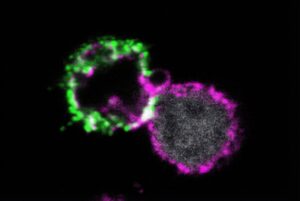
In pediatric and young adult B-cell precursor ALL, FDA lists Kymriah (tisagenlecleucel) for patients up to age 25 whose disease is refractory or in second or later relapse.
In adult B-cell precursor ALL, FDA lists Tecartus (brexucabtagene autoleucel) for adult patients with relapsed or refractory B-cell precursor ALL. The FDA Tecartus page and package insert both reflect this adult indication.
For many patients, standard care still includes regular red blood cell transfusions plus iron chelation. Gene therapy enters the discussion when the goal is a more durable reduction in transfusion burden and when the patient is medically fit enough for the risks of stem-cell collection, conditioning, hospital admission, and recovery.
So yes, approval is different for adults and children or young adults. The currently approved products, age ranges, and label wording are not the same.
Investigational Targets and Dual-Target Constructs
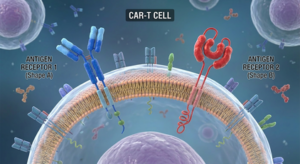
Outside the currently approved CD19-directed B-ALL pathways, many CAR-T approaches in ALL are still investigational. This includes T-ALL programs and dual-target constructs designed to reduce escape from a single antigen target. ClinicalTrials.gov shows ongoing work in targets and combinations such as CD19/CD22 and other exploratory designs.
These trial approaches are important, but they should not be presented as established care. For a patient-facing page, the safest wording is that approved CAR-T in ALL is mainly in certain B-cell precursor ALL settings, while T-ALL and many dual-target strategies remain under study.
Who May Qualify
Whether CAR-T may fit depends on the disease subtype, prior lines of therapy, disease burden, organ function, and age or product fit. FDA labeling for Kymriah and Tecartus also reflects important treatment-timing and safety considerations, including active uncontrolled infection and fitness for the treatment process.
Eligibility
Eligibility for CAR-T in acute lymphoblastic leukemia depends on the leukemia subtype, prior treatment history, overall medical fitness, and whether the patient can safely complete the full treatment and monitoring process.
- B-ALL versus T-ALL subtype
- Prior lines of therapy and response history
- Disease burden at time of infusion planning
- Organ function and overall medical fitness
- Age and product-label fit
- Ability to complete collection, conditioning, infusion, and monitoring

Risks and Monitoring
The biggest side effects to explain on-page are cytokine release syndrome (CRS), ICANS, infection, and cytopenias. FDA prescribing information for both Kymriah and Tecartus highlights these risks, and Kymriah’s label specifically notes that high pre-infusion tumor burden is a risk factor for severe CRS in pediatric and young adult B-ALL.
Because of these risks, CAR-T requires close monitoring and specialized supportive care. Patients may also need bridging therapy, hospital-based observation, transfusion support, or infection management depending on disease status and the treatment center’s practice. This last point is an inference from the label-based safety and treatment workflow rather than a single FDA sentence.
Risks
CAR-T treatment for acute lymphoblastic leukemia can cause serious side effects and requires close follow-up after infusion.
Patients often need careful supportive care, monitoring, and recovery planning during the early period after treatment.
CRS – ICANS and other neurologic toxicity – Infection – Cytopenias – Need for close monitoring after infusion
Recovery burden and supportive-care needs
Gene Therapy vs Transplant and Chronic Transfusion Care
| Comparison Point | CAR-T | Stem Cell Transplant | Other Salvage Options |
|---|---|---|---|
| Main role | Important option in relapsed or refractory B-ALL in appropriate patients. | Still remains part of ALL care for some patients. | May include other immunotherapy, chemotherapy, or clinical trials. |
| When it may be used | Used when the leukemia subtype, prior treatment history, age, and product-label fit make CAR-T appropriate. | May still be considered depending on response durability, measurable residual disease status, disease biology, and the broader treatment plan. | May be used before CAR-T, instead of CAR-T, after CAR-T, or when neither CAR-T nor transplant is the best fit. |
| Important limitation | Current approved ALL CAR-T pathways are tied to B-cell precursor disease, not standard approved T-ALL care. | Does not get replaced automatically just because CAR-T is available. | Choice depends on the patient’s subtype, age, prior therapies, and treatment goals. |
| How the balance changes | The role of CAR-T differs between pediatric/young adult B-ALL and adult B-ALL settings. | The decision to use transplant after CAR-T or instead of CAR-T also differs across age groups and disease settings. | T-ALL remains more investigational in the CAR-T setting, which can shift attention toward trials and other salvage strategies. |
| Best patient-facing explanation | CAR-T is important, but it is not the only salvage option. | Transplant still remains part of ALL care for some patients. | The best plan depends on age, disease biology, MRD status, response durability, and the larger treatment strategy. |
Questions to Ask Your Care Team
Is the leukemia B-ALL or T-ALL?
Does the patient fit an approved B-cell precursor ALL indication?
Is the current option more like Kymriah or Tecartus?
How much does age affect which CAR-T can be considered?
Is transplant still part of the plan after CAR-T response?
What side effects matter most in this case?
Are there investigational trials for dual-target or T-ALL strategies?
Which salvage options should be compared before referral?
FAQ
Is CAR-T approved for ALL?
Yes, but in selected B-cell precursor ALL settings. FDA lists Kymriah for patients up to age 25 with refractory or second-or-later-relapse B-cell precursor ALL, and Tecartus for adult patients with relapsed or refractory B-cell precursor ALL.
Is approval different for adults and children?
Yes. Kymriah’s listed ALL indication is for patients up to age 25, while Tecartus is listed for adults with relapsed or refractory B-cell precursor ALL.
What is the difference between B-ALL and T-ALL CAR-T?
Current FDA-approved CAR-T in ALL is for B-cell precursor ALL. T-ALL CAR-T is still investigational, with trial programs exploring new targets and approaches.
Is transplant still used after CAR-T?
Sometimes, yes. Transplant still has a role for some patients after CAR-T, depending on response depth, relapse risk, age group, subtype, and the overall salvage strategy. The page should present this as individualized rather than automatic.
What side effects matter most?
The biggest side effects are CRS, ICANS, infection, and cytopenias. High leukemia burden before infusion can also raise severe CRS risk in pediatric and young adult B-ALL treated with Kymriah.
Are there ESSEN-relevant trials for ALL?
There are active ALL CAR-T trials on ClinicalTrials.gov, including investigational dual-target and other novel constructs. Whether any are relevant to a specific center or referral pathway depends on geography, eligibility, subtype, and study status, so this should be reviewed case by case rather than assumed.
treatment for each cancer:
Medical Disclaimer & Source References
© BEIJING BIOTECH.
Clinical Sources: NCCN, ASCO, ACS, ESMO, CSCO, CACA, ChiCTR.
Regulatory Status: CAR-T is FDA-approved in selected ALL settings. Other constructs or disease settings may be investigational.