
CAR-T Therapy for Lymphoma
FDA-approved in selected relapsed/refractory lymphoma settings.
CAR-T therapy is an important treatment option for some people with lymphoma, especially in selected relapsed or refractory B-cell lymphoma settings. It is not used for every lymphoma subtype, and the exact place of CAR-T depends on the lymphoma type, prior treatments, disease behavior, and whether another option such as transplant, bispecific therapy, antibody-based therapy, chemotherapy, or a clinical trial may fit better.
Treatment is usually given through specialized centers with cellular therapy experience. Because CAR-T can cause serious side effects and requires close follow-up, referral decisions are based on both the lymphoma and the patient’s overall condition.
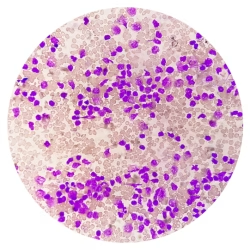
Lymphoma Types Where CAR-T May Matter
CAR-T matters most in selected B-cell lymphomas. Current FDA-approved lymphoma uses include important settings in large B-cell lymphoma, follicular lymphoma, and mantle cell lymphoma. Depending on the product label, large B-cell lymphoma can include diseases such as DLBCL, primary mediastinal large B-cell lymphoma, high-grade B-cell lymphoma, and DLBCL arising from follicular lymphoma.
So CAR-T is not only for DLBCL. It also has approved use in follicular lymphoma and mantle cell lymphoma, and some products now include additional B-cell lymphoma settings such as marginal zone lymphoma.
When Referral Usually Happens
Referral usually happens when lymphoma is relapsed or refractory, especially when standard therapy has stopped working well enough or when relapse happens early after first-line treatment. In large B-cell lymphoma, CAR-T may enter the discussion much earlier than it used to, particularly when disease is refractory to first-line chemoimmunotherapy or relapses within 12 months.
In follicular lymphoma and mantle cell lymphoma, CAR-T is often considered after more prior treatment exposure, depending on the exact product and label. Timing also depends on symptoms, pace of progression, performance status, and whether the patient can safely wait through collection and manufacturing.
Staging
Eligibility depends on the lymphoma subtype, prior lines of therapy, performance status, and organ function. Centers also consider blood counts, infection status, disease burden, neurologic history, and whether the patient can complete close monitoring after infusion.
Exact lymphoma subtype and pathology
Prior lines of therapy and response history
Performance status and daily function
Organ function and blood count reserve
Infection status and other active medical problems
Ability to travel, return quickly if needed, and complete follow-up

Risks and Monitoring
The biggest early risks are cytokine release syndrome (CRS) and ICANS, a neurologic toxicity syndrome. CRS can cause fever, low blood pressure, breathing problems, and other whole-body symptoms. ICANS can cause confusion, difficulty speaking, sleepiness, tremor, or other neurologic changes. Infection and cytopenias are also major concerns.
Because of these risks, CAR-T requires structured monitoring and follow-up after infusion. Some patients also need transfusions, infection prevention, or a longer recovery period than expected.
Risks box
CRS, ICANS, and other neurological side effects
Infections, cytopenias, and the need for close monitoring after infusion
Recovery that may take weeks to months
| Comparison Point | CAR-T Therapy | Transplant and Other Therapies |
|---|---|---|
| Role after relapse | CAR-T is one important treatment option after relapse in selected lymphoma settings. | Other options after relapse may include stem cell transplant, bispecifics, antibody-based therapy, chemotherapy, and clinical trials. |
| How the decision is made | The decision depends on lymphoma subtype, prior treatment response, disease pace, age, comorbidities, and treatment goals. | The same factors help determine whether transplant or another therapy may be a better fit. |
| Use in large B-cell lymphoma | In some large B-cell lymphoma settings, CAR-T has moved earlier and may be discussed instead of the older transplant pathway. | Transplant still matters in lymphoma care and remains important for selected patients depending on the situation. |
| Treatment timing | May be considered when CAR-T is an appropriate option based on approved use, specialist review, and access to a treating center. | Some alternatives may be chosen based on timing, access, prior response, or whether another treatment can start sooner or better match the patient’s condition. |
| Best patient-facing explanation | CAR-T is not the only option after relapse, but it can be an important choice in the right lymphoma setting. | Transplant and other therapies still play a major role, and some patients may be better served by one of these options depending on their subtype and overall situation. |
Questions to Ask Your Care Team
Is CAR-T approved for my exact lymphoma subtype?
Am I in a setting where CAR-T is usually considered now?
How many prior treatment lines matter in my case?
Would transplant still be considered, or is CAR-T more realistic?
Is my disease moving too quickly to wait for CAR-T manufacturing?
What side effects are most important for me personally?
Am I a candidate even if I am older or have other medical issues?
Should I ask about a clinical trial now?
FAQ
Which lymphoma types use CAR-T?
Current FDA-approved lymphoma CAR-T use includes selected large B-cell lymphoma, follicular lymphoma, and mantle cell lymphoma settings. Some products also include additional B-cell lymphoma settings such as marginal zone lymphoma.
Is CAR-T only for DLBCL?
No. DLBCL is one of the main CAR-T settings, but CAR-T is also used in follicular lymphoma and mantle cell lymphoma, and some products have broader B-cell lymphoma indications.
After how many treatment lines is CAR-T considered?
It depends on the subtype and the product. In large B-cell lymphoma, CAR-T may be considered as early as refractory disease to first-line chemoimmunotherapy or relapse within 12 months, while other lymphoma settings still require 2 or more prior lines of therapy.
Is transplant still needed after CAR-T?
Sometimes transplant still has a role, but not every patient needs transplant after CAR-T. In some lymphoma settings, CAR-T is discussed as an alternative rather than a bridge to transplant. The answer depends on the subtype, remission status, response, and overall plan.
What are the biggest side effects?
The main serious side effects are CRS, ICANS, infection, and cytopenias. These are the main reasons CAR-T requires close monitoring at an experienced center.
Can older adults get CAR-T?
Yes, some older adults can still get CAR-T. Age alone does not automatically rule it out. Fitness, organ function, performance status, comorbidities, and the exact lymphoma setting matter more than age by itself.
Cancer treatments:
Medical Disclaimer & Source References
© BEIJING BIOTECH.
Clinical Sources: NCCN, ASCO, ACS, ESMO, CSCO, CACA, ChiCTR.
Regulatory Status: CAR-T is FDA-approved in selected lymphoma settings. Other uses may be investigational unless noted.